


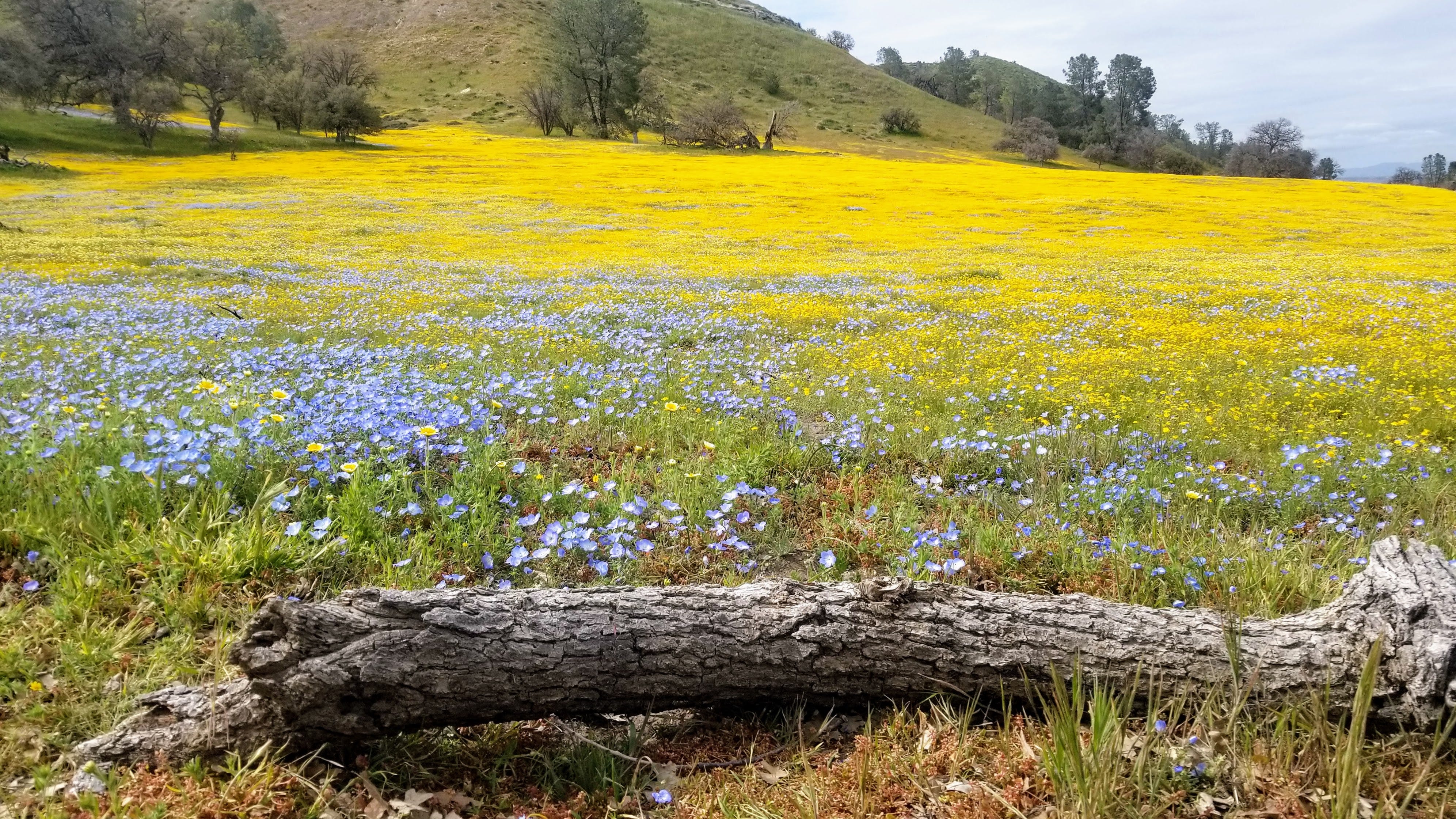
Many springs ago, I was leading a group along a trail up one of our coastal peaks. The hills were a soft emerald green, and the grasses were heavy with seed heads, undulating in windwolves loping across the hills with the onshore wind. Lupines, poppies, buttercups, owls’ clover, milkmaids, and other flowers dotted the hillsides. The chaparral was also in bloom with black sage, deerweed, and sticky monkeyflower, adding to the color fest.
I was rambling on about how lucky we were to spend time in such a beautiful place, especially when everything was in full bloom. I stopped, turned to the group, and remarked that I believed Emerson was right when he said, “The earth laughs in flowers.” Several people smiled and nodded, but one woman was not on the same wavelength. Her eyes were watery and red, and as she wiped her nose, she looked back at me and said, “Others may like it, but this is the worst time of year for me. I’m allergic to pollen.”
As I had never really suffered from any allergies, it never dawned on me that where some saw beauty, others saw an assault on their immune system. I immediately felt sorry for her and others afflicted by the curse of tiny airborne packets of sperm cells.
Reproduction in living things usually means that two separate organisms must meet up and exchange reproductive material. The problem plants have is that they can’t really get up and wander around to find their partner. As a result, their workaround is to produce highly motile, lightweight male gametes, or sperm cells, that can be delivered to their partners by wind or by animals.
Around 80-90% of plant species use animals to distribute their pollen. These can be insects like bees, wasps, flies, butterflies, moths, and beetles, as well as birds and some mammals such as bats and lemurs. Only around 10-20% of plant species use wind, but here’s the rub for all you allergy sufferers: those wind pollinators account for almost 90% of all individual plants! So, when we have those high-pollen count days, we must blame it on the grasses and trees that inhabit our grasslands, meadows, and forests. They’re the ones pumping out their airborne male reproductive material in the hopes of finding a receptive female stigma to stick to, and it’s the pollen’s stickiness that’s the issue.
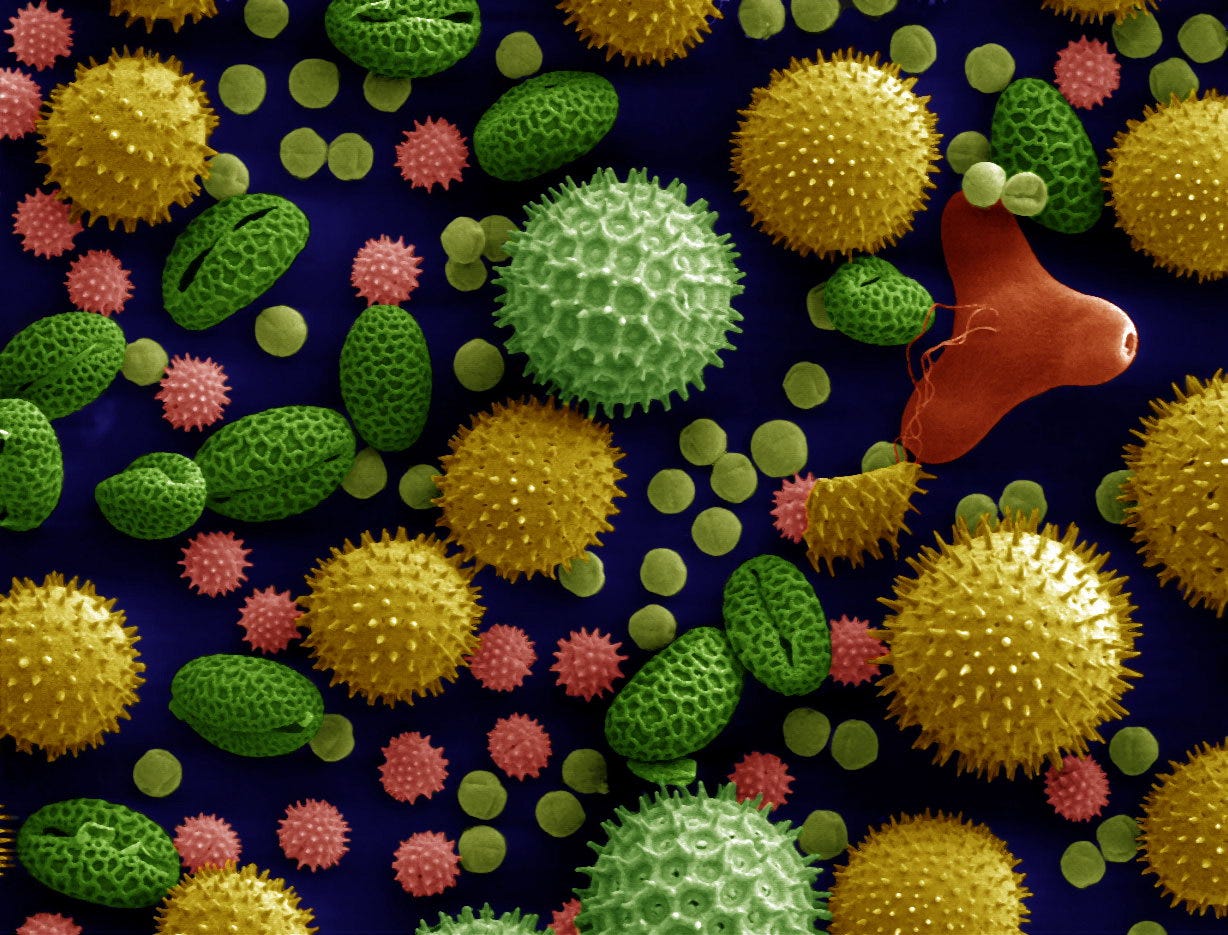
When I’ve looked at microscopic photos of pollen, I figured it was all their spikes and protrusions that irritated our eyes, noses, and throats. But that’s not the case. It’s the proteins that form the sticky covering found on the surface of pollen grains (called a pollenkit) that make our immune system overreact. The pollenkit surrounding the pollen grain is a signature blend of chemicals and proteins that enable the female structure to instantly recognize a pollen grain from its own species and allow fertilization, and in some cases, prevent self-fertilization.
The bad news for allergy sufferers is that in a warming world with higher atmospheric CO2 levels, scientists are seeing longer pollen seasons and plants producing vastly more pollen than when grown in atmospheres with less CO2.
But let’s end with good news. Our wildflower displays and color fests, seen every year on our hills and in our gardens, are largely not to blame for high pollen counts. Plants that are insect-pollinated have particularly sticky and heavier pollen. That way, it will adhere more readily to the visitors they have enticed to their blooms by their fancy colors, scents, and secretions. The real culprits are those inconspicuous grass and tree flowers that produce those lightweight airborne packets of sperm cells.
So, it turns out we can continue to trust Emerson every spring. The Earth does indeed laugh in flowers.
Like this post? Please hit the 💛 to show your support. It helps the Substack algorithm show it to more people! Also, consider sharing it with a friend by clicking the “share” button, and don’t forget to subscribe for more posts from Ruminations of a Naturalist.


